
Homogenizing Light for Optical Systems

Homogenizing Light for Optical Systems
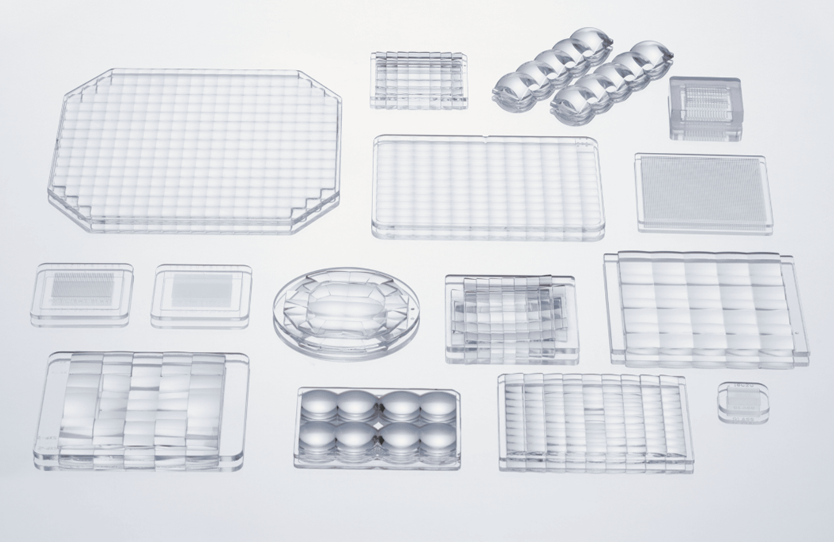
A lens array (also known as a fly's-eye lens or integrator lens) is an optical component designed to transform non-uniform illumination into a highly uniform light distribution. It is widely used in applications where stable and reproducible illumination is essential, including projectors, exposure equipment, and medical devices.
At ISUZU GLASS, lens arrays are manufactured using a precision glass molding process. This technology enables efficient production of complex glass lens arrays that may be difficult or impractical to manufacture using conventional polishing and assembly methods, while providing consistent optical quality and stable production.
What Is a Lens Array?
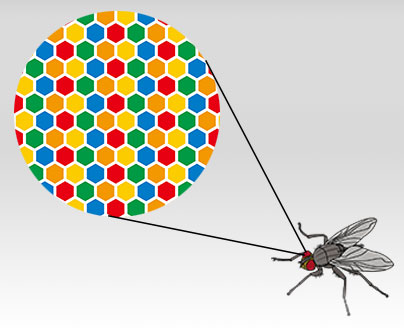
A lens array consists of multiple lens elements arranged in a regular two-dimensional pattern. Because of its appearance, it is commonly referred to as a "fly's-eye lens." In many optical systems, the terms "lens array," "fly's-eye lens," and "integrator lens" are used interchangeably.
Its primary function is to homogenize the intensity distribution of incident light, producing uniform illumination across the target surface.
How Are Glass Lens Arrays Manufactured?
Compared with manufacturing and assembling individual lens elements, precision glass molding enables the entire lens array to be formed as a single glass component.
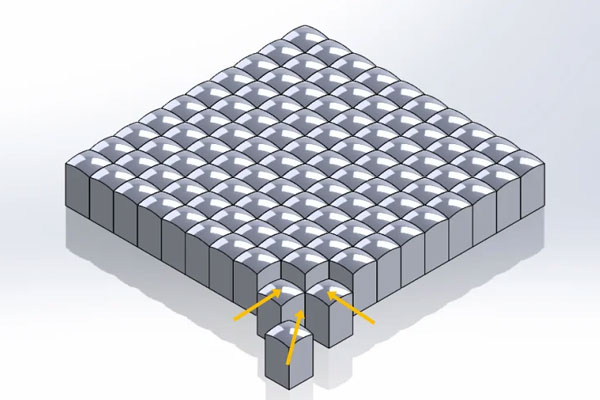
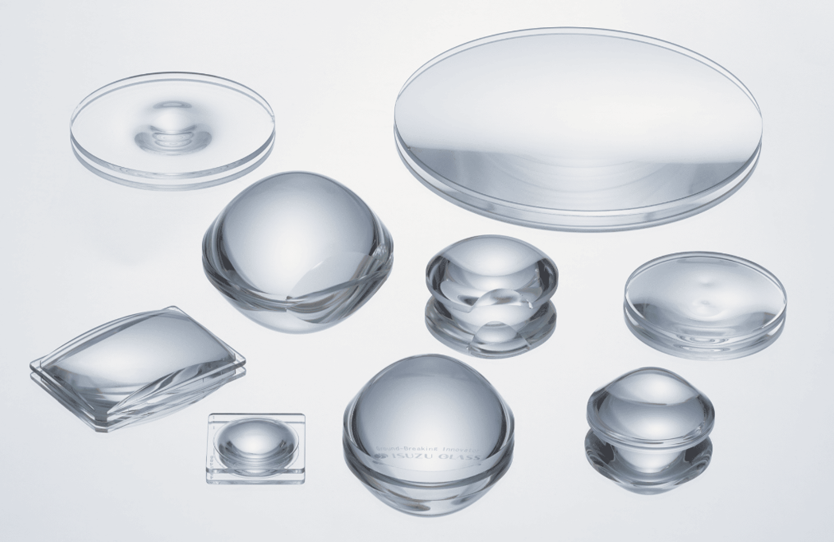
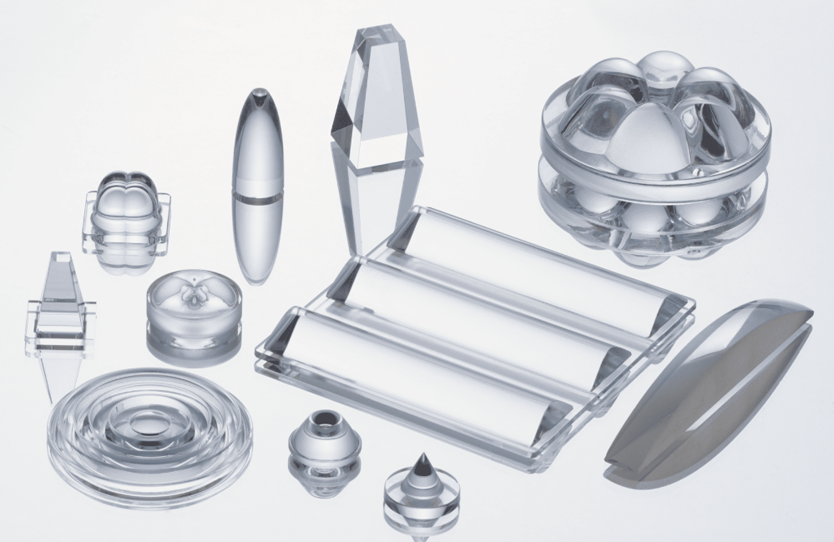
ISUZU GLASS uses high-precision molds to form complex lens geometries directly into glass. This approach enables the production of lens arrays that may be difficult to achieve through conventional polishing and assembly, while providing excellent process repeatability and production efficiency.
Successful implementation of this process requires expertise in mold design, precision glass molding, and process control. These capabilities enable stable production of high-quality glass lens arrays for demanding optical applications.
Operating Principle
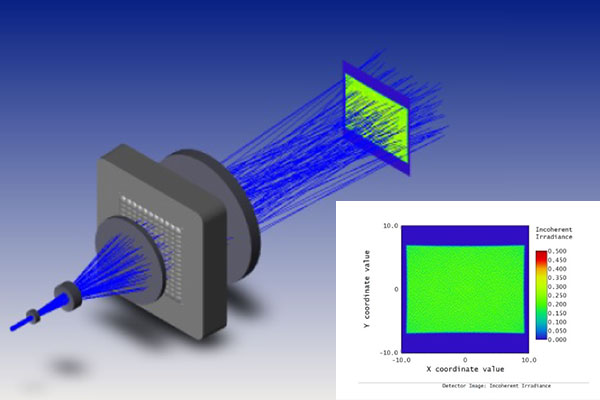
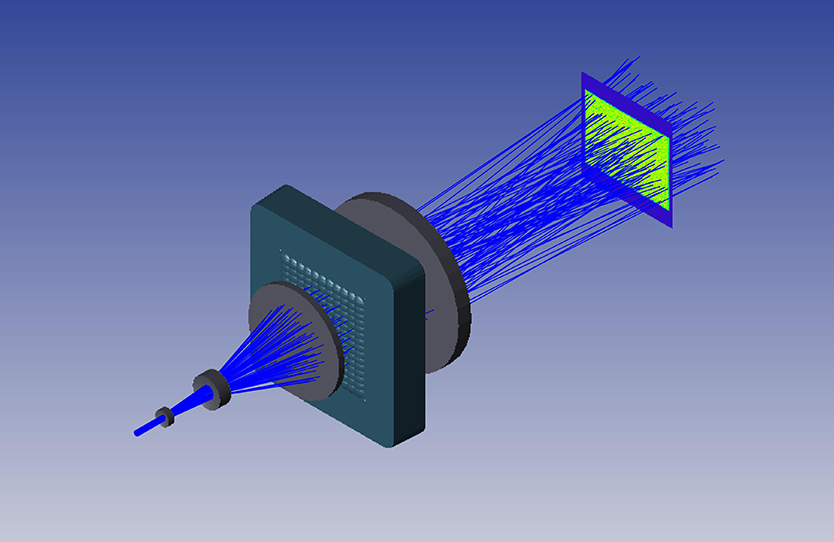
A lens array divides the incoming light beam into multiple beamlets. Each lens element focuses its portion of the light, and the beamlets are then recombined by a relay lens. The superposition of these beamlets creates a more uniform illumination pattern on the target plane.
Many light sources exhibit non-uniform intensity distributions, such as Gaussian laser profiles or spatial variations generated by lamp-based optical systems. By optically averaging these intensity variations, a lens array can significantly improve illumination uniformity across the target area.
In a properly designed illumination system, a lens array can typically achieve edge-to-center illumination uniformity of 85% or higher.
Typical Applications
-
・Exposure equipment
-
・Projectors
-
・Medical devices
-
・3D printers
Typical Applications
-
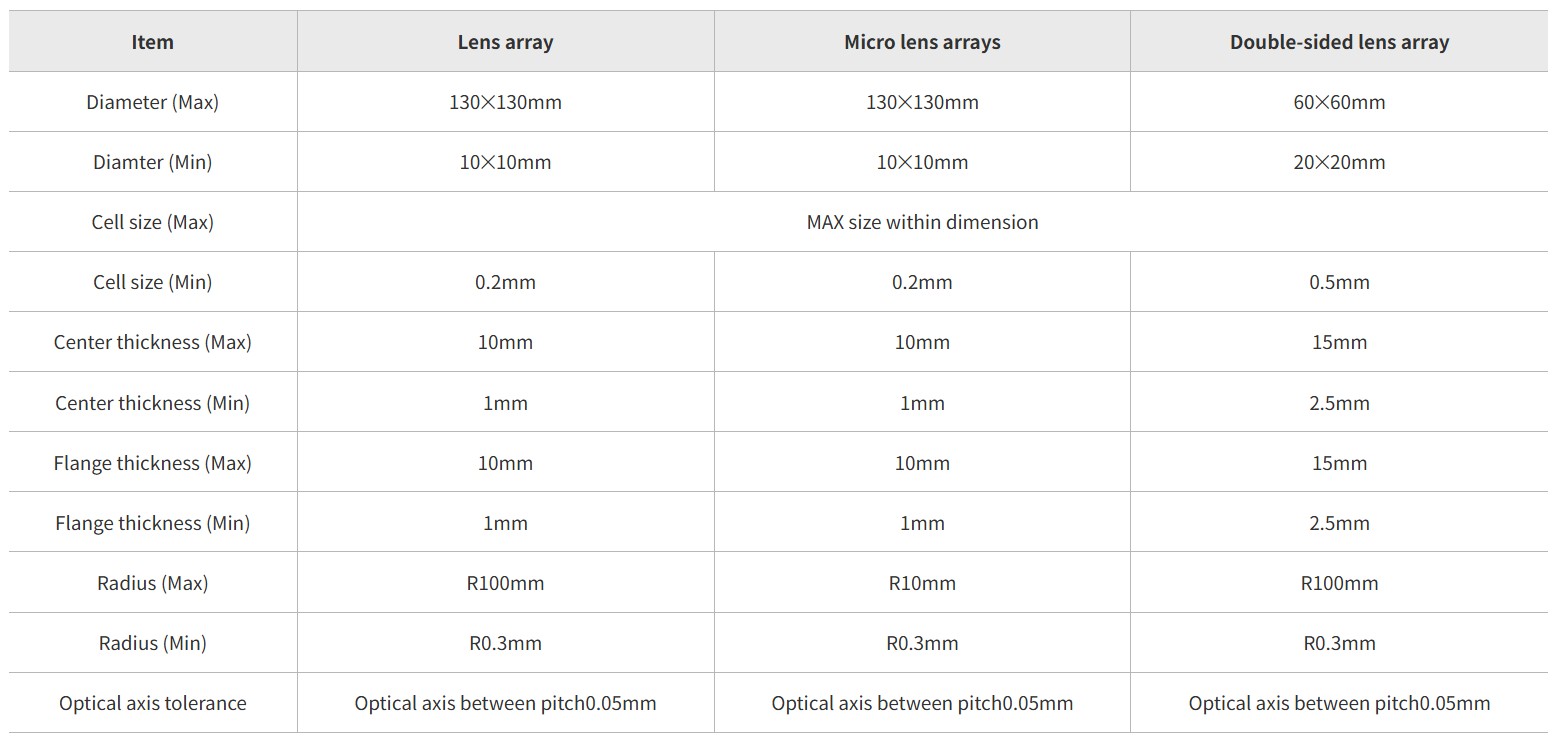
・Compatible with spherical, aspherical, cylindrical, and freeform lens geometries, including decentered configurations
-
・Capable of manufacturing fine-pitch microlens arrays
-
・Monolithic glass construction without adhesive bonding, offering advantages for high-power light applications
-
・High dimensional consistency enabled by precision glass molding
Typical Applications
-
・B270
-
・LIBA2000+
-
・Pyrex
-
The selection of glass material depends on the required optical performance, geometry, and application. Please contact us to discuss the most suitable material for your project.
Detailed information on available glass materials can be found on the respective product pages.
View Our Lens Array Product Page
Operating Principle

If you have any opinions about the functions or requests,
please contact through below request form.