Molded Glass Lenses vs. Polished Glass Lenses

Understanding the Differences in Manufacturing Processes and Applications
Glass lenses can be manufactured using different processes, depending on the required optical performance, lens geometry, production volume, and cost targets. Two common approaches are precision glass molding and conventional grinding and polishing.
Each process offers distinct advantages, and the right choice depends on the specific requirements of the optical system. This article explains the key differences between molded and polished glass lenses and provides guidance on selecting the most suitable process for your application.
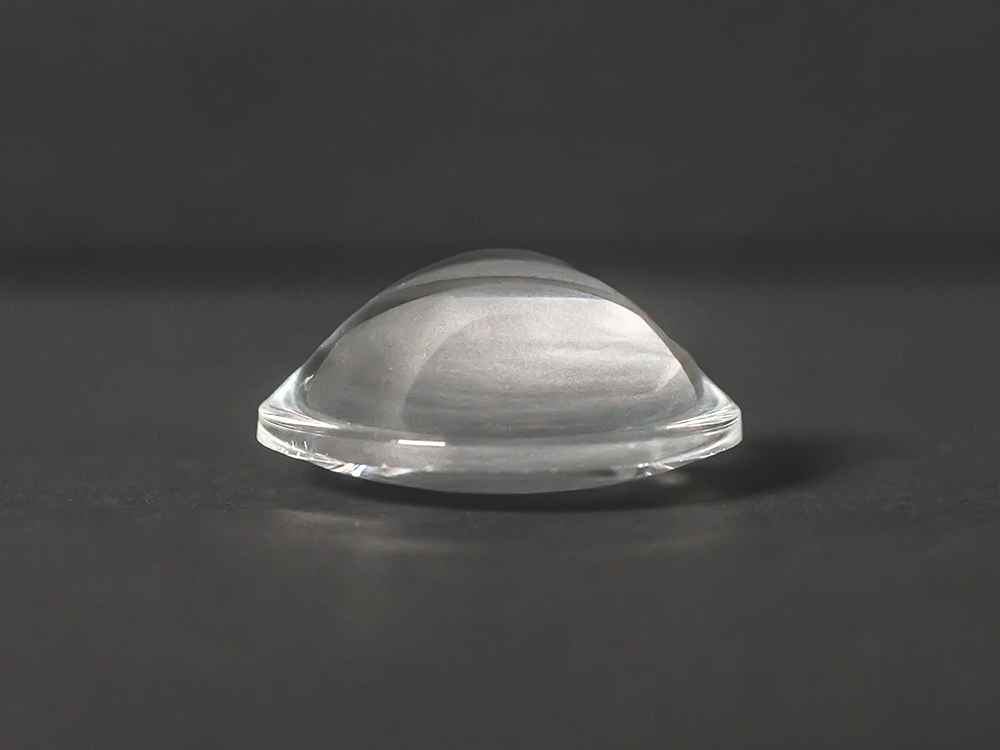
What Are Molded Glass Lenses?
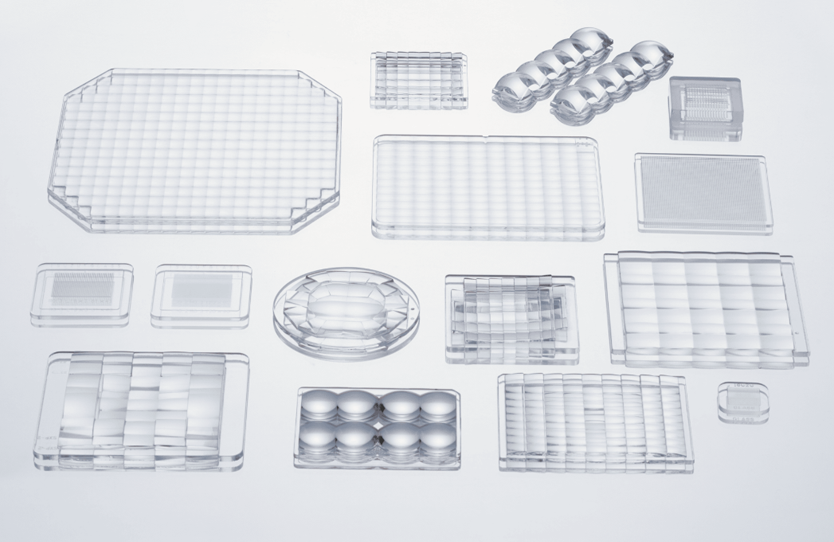
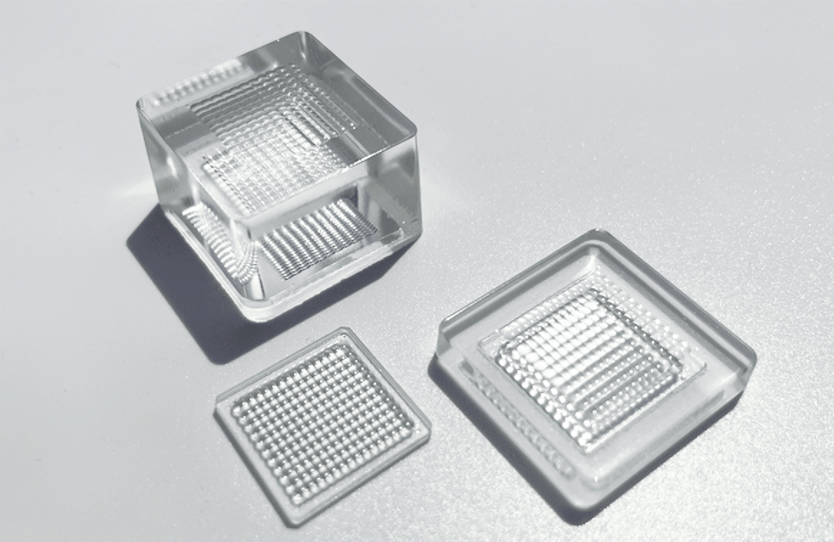
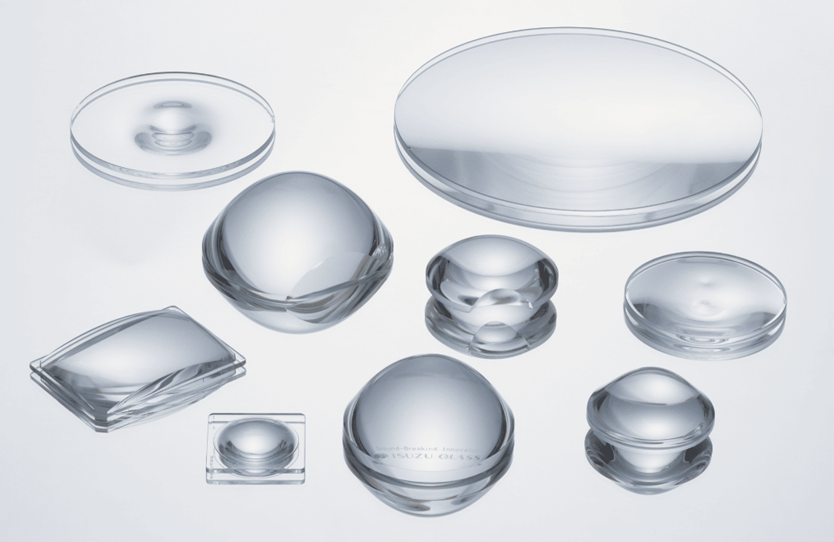
Molded glass lenses are manufactured by heating optical glass until it softens and then pressing it into the desired shape using a precision mold.
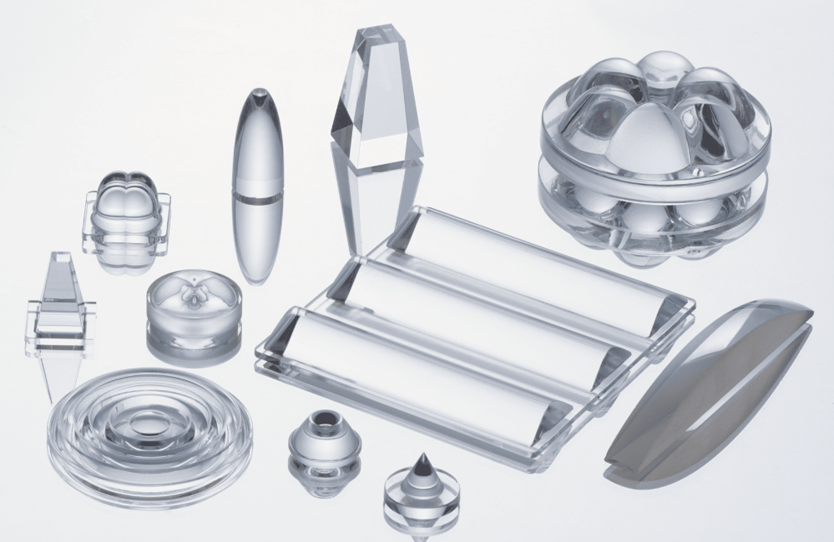
Because the lens geometry is defined by the mold, this process enables consistent, repeatable production of lenses with complex geometries. Once the mold has been developed and the process optimized, molded lenses can be manufactured efficiently in large quantities.
Key Advantages
・Cost-effective mass production: Helps reduce per-unit manufacturing costs at higher production volumes.
・High production efficiency: Enables consistent, repeatable manufacturing using precision molds.
・Flexible lens geometries: Supports Aspherical lens and other molded lens, depending on the mold design and manufacturing requirements.
Molded glass lenses are widely used in optical systems for illumination, microscopy, endoscopy, and projection, among other applications.
What Are Polished Glass Lenses?
Polished glass lenses are manufactured by grinding and polishing optical glass to achieve the required surface geometry and finish.
This process offers flexibility in lens design and is well suited to applications requiring tight control of lens geometry, large-diameter optics, or relatively small production quantities. It is also commonly used for prototyping and applications where manufacturing flexibility is a priority.
*Note: Molded lenses may also undergo polishing during mold fabrication or subsequent finishing. In this article, "polished glass lenses" refers to lenses whose optical geometry is produced primarily through grinding and polishing, rather than directly formed in a mold.
Key Advantages
・Precise surface control: Allows precise control of lens geometry and surface finish, depending on the manufacturing process and specifications.
・Suitable for prototyping and small production runs: Offers flexibility when developing new optical designs or producing limited quantities.
・Suitable for large-diameter optics: Provides flexibility for manufacturing lenses with larger apertures and specialized geometries.
Polished glass lenses are used in applications where optical performance, dimensional accuracy, or design flexibility is a key consideration.
Which Manufacturing Process Should You Choose?
Neither molded nor polished glass lenses are inherently superior. The most suitable process depends on the application's optical requirements, production volume, lens geometry, and target cost.
For example:
・For high-volume production: Precision glass molding is often a suitable choice, particularly when the lens geometry can be achieved through molding and production efficiency is a priority.
・For prototyping or small production runs: Grinding and polishing may offer greater flexibility during optical design development.
・For demanding precision requirements: The appropriate process should be selected based on the required surface accuracy, surface finish, optical performance, and dimensional tolerances.
・For specialized or large-diameter lenses: Grinding and polishing may be advantageous, depending on the lens design and manufacturing specifications.
Evaluating these factors early in the development process can help identify the most appropriate manufacturing approach and balance optical performance, production efficiency, and overall cost.
The Strengths of ISUZU GLASS
ISUZU GLASS specializes in precision glass molding and has manufactured thousands of different molded lens designs over the years.
Our extensive manufacturing experience and accumulated expertise in mold design and glass molding enable us to propose lens solutions tailored to each customer's application and technical requirements.
Whether you are planning to scale up production or considering replacing conventionally manufactured lenses with molded glass lenses, we can help you evaluate the feasibility of precision glass molding for your application.
Contact ISUZU GLASS to discuss your requirements, including lens geometry, optical performance, production volume, and target cost. Our team will work with you to identify a suitable solution for your project.